
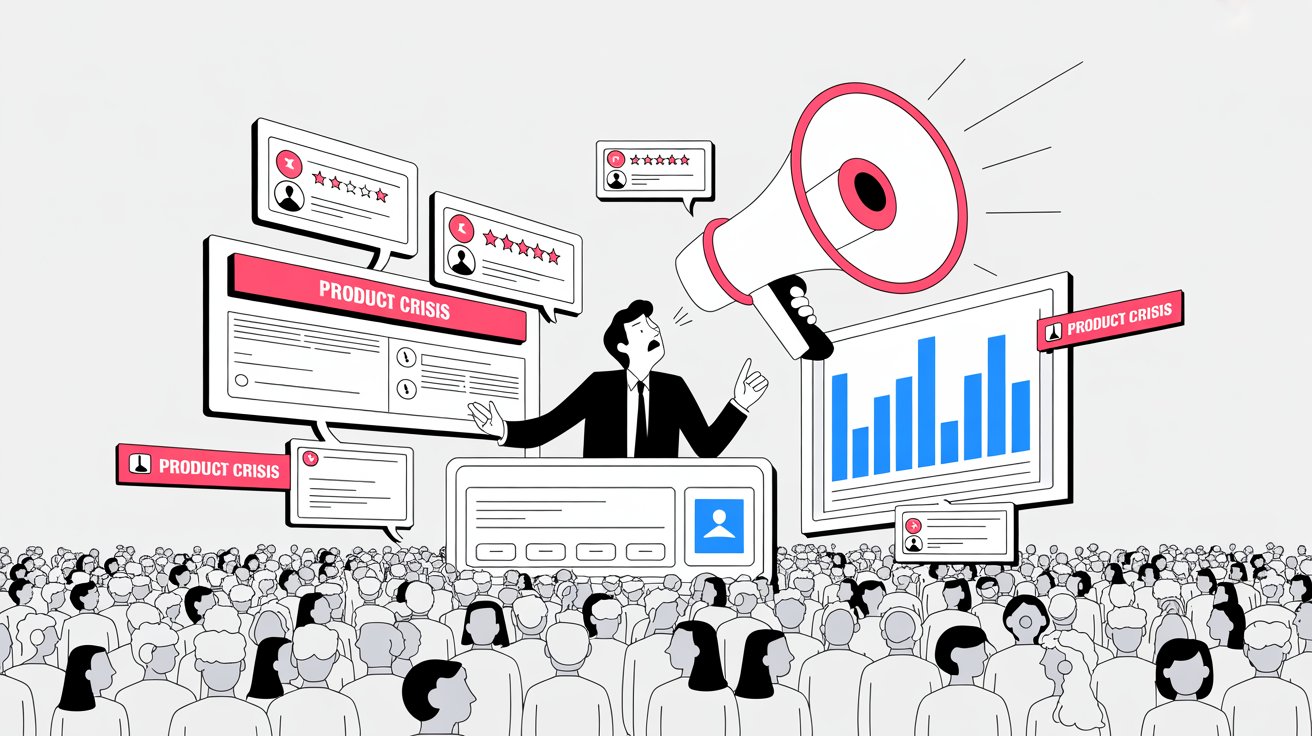
Collecting customer feedback is easy, but interpreting it without ruining your product?
That’s where brands get it wrong.
Here’s the harsh reality, collecting feedback is only 20% of the battle.
So it’s easy to misread customer feedback.
- Like a few negative comments become a “product crisis.”
- Or one viral compliment shapes the entire strategy.
- Additionally, the loudest consumers can occasionally sway decisions for everyone else.
If you want to stop misreading your audience, keep an eye out for these five interpretation traps:
→ The Validation Filter
Teams naturally hold onto praise and dismiss criticism as “edge cases.” But negative feedback often reveals the clearest friction points.
→ The Loudest Voice Trap
Over-optimizing for one vocal customer can quietly ruin the experience for the silent majority.
→ Words vs. Actions
So what customers say they want in a survey often contradicts what they actually do. That’s why combining feedback with behavioral data matters.
Even approaches like Outrich can help teams test how messaging lands before fully committing to it.
→ Over-Automating the Context
Sentiment dashboards help, but relying only on automation removes human nuance from the conversation.
→ The "Feature Factory" Mindset
Trying to build every single user request turns a clean, efficient product into a bloated, confusing mess. Filter every new proposal through your primary goal.
One thing that’s becoming more useful lately is seeing customer reactions before scaling outreach or campaigns.
Sometimes the issue isn't with the product itself. It’s how brands interpret what customers are actually trying to say.